EVOLUTION
This is a page I have put this page together to give me convenient access to information on this subject.
My books on evolution
Click here for printable searchable PDF
| HOME. | EVOLUTION This is a page I have put this page together to give me convenient access to information on this subject. My books on evolution Click here for printable searchable PDF |
|
|||
| Introduction | Evolutionary trees | Evidence for evolution | For expanded view of this Click here | ||
| History of the idea of evolution | Clades | ||||
| Lamarck Lyell Hooker Wallace Darwin | Useful Wikipedia links | ||||
| Introduction | ||||
| The Earliest Life The age of the Earth is about 4.5 billion years and the earliest life on Earth dates from at least 3.5 billion years ago. Evolution does not attempt to explain the origin of life but it does explain how early lifeforms evolved into the complex life that we see today. Based on the similarities between all present-day organisms, all life is assumed to have originated from a 'last universal ancestor' from which all known species have arisen through evolution. Evolution Living creatures reproduce and become more numerous, but predation and competition work against the survival of individuals. Individual differs from their parent(s) in minor, random ways due to mutations in their DNA. When these differences (traits) are beneficial, the offspring are more likely to survive and reproduce. If the differences are detrimental there will be less chance of survival. Natural Selection is the result of this process resulting in changes within the population. When the population of a species is sufficiently different from the parent population they will be called a different species, a characteristic of this being that the two ppulations do not interbreed. Sexual selection occurs when some traits are actively preferred by mating partners. Females may also prefer traits that confer the lowest cost to their reproductive health, which is known as Fecundity selection. |
Natural selection is a cornerstone of modern biology. The concept, published by Darwin and Alfred Russel Wallace in a joint presentation of papers in 1858, was elaborated in Darwin's influential 1859 book On the Origin of Species by Means of Natural Selection, or the Preservation of Favoured Races in the Struggle for Life. He described natural selection as analogous to artificial selection, a process by which animals and plants with traits considered desirable by human breeders are systematically favoured for reproduction. The concept of natural selection originally developed in the absence of a valid theory of heredity; at the time of Darwin's writing, science had yet to develop modern theories of genetics. The union of traditional Darwinian evolution with subsequent discoveries in classical genetics formes the modern synthesis of the mid-20th century. |
|||
| TOP | ||||
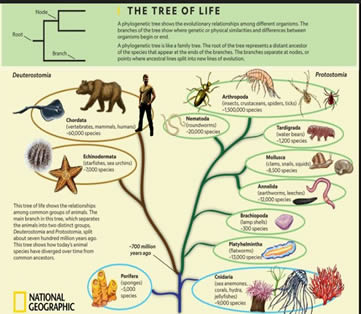
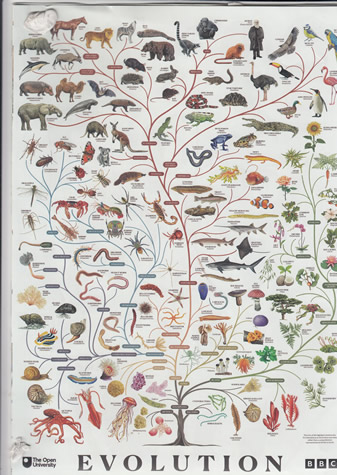
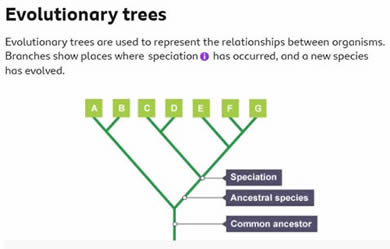
Evolutionary trees (Phylogenetic trees) |
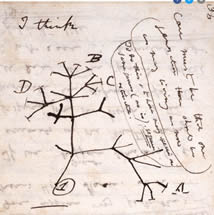 Darwin's Tree of Life |
 |
||
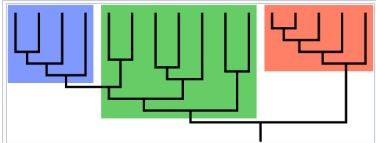
| Clades, cladograms and cladistics An alternative way of representing evolutionay relationships is to use a Cladogram. A clade is a group of organisms that is composed of a common ancestor and all of its descendants. Clades are the fundamental unit of cladistics, a modern approach to taxonomy adopted by most biological fields. |
 |
|||
| A Cladogram illustrating the relationships of organisms within groups known as clades. The vertical line at the bottom represents the last common ancestor. The blue and red groups are clades, each defined by a common ancestor stem at the base of its subgroup (branch). The green subgroup alone is not a clade; it is a paraphyletic group relative to the blue subgroup because it excludes the blue branch which shares the same common ancestor. Together the blue and green groups form a clade. | ||||
| TOP | ||||
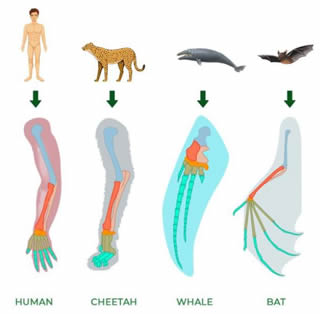
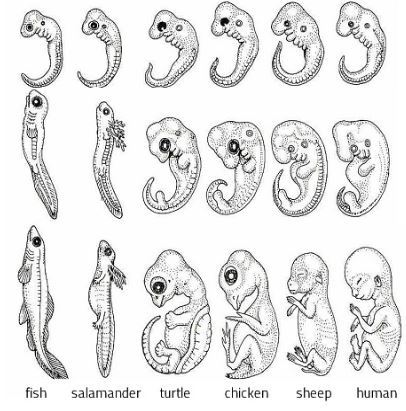
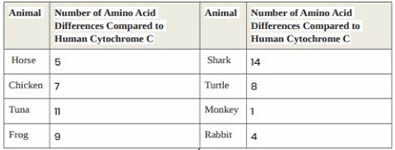
Brief summary of the evidence for evolution Comparative Anatomy and Embryology: Different species share homologous structures—like the bone structures in a frog's foot, a human hand and arm, a bird's wing, and a whale's flipper—because they inherited them from a common ancestor. |
 |
 |
||
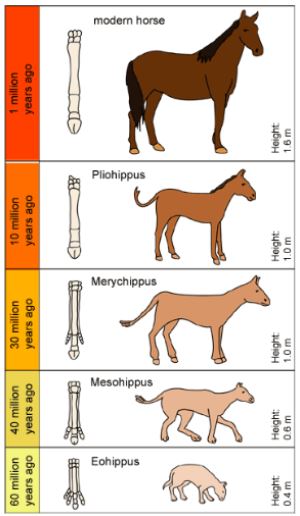
| From Comparative anatomy | From the fossil record | |||
 |
 |
|||
| From Embryology | From DNA / Protein record; in this example using cytochrome c | |||
| .................... | .............................................................................................................................................................................. | |||
| History of the idea of evolution; the lives and contributions of Jean-Baptiste Lamark, Charles Lyell, Joseph Hooker, Alfed Russel Wallace and Charles Darwin |
||||
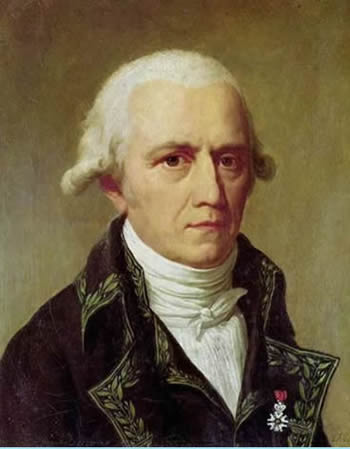
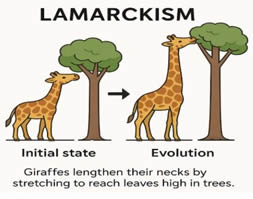
| Jean-Baptiste Lamarck 1744 - 1829 Lamarck was a French naturalist, biologist, academic, and soldier. He was an early proponent of the idea that biological evolution occurred and proceeded in accordance with natural laws. He fought in the Seven Years' War against Prussia. Posted to Monaco, Lamarck became interested in natural history. He retired from the army to study medicine. He developed a particular interest in botany, and after publishing Flore française in 1778, he gained membership of the French Academy of Sciences and became involved in the Jardin des Plantes and was appointed to the Chair of Botany. When the French National Assembly founded the Muséum national d'Histoire naturelle in 1793, Lamarck became a professor of zoology. In 1801, he published Système des animaux sans vertèbres, a major work on the classification of invertebrates, a term which he coined. In an 1802 publication, he became one of the first to use the term "biology" in its modern sense. In 1809, Lamarck published his monumental Philosophie zoologique (Zoological Philosophy) putting forth the first comprehensive, systematic theory of biological evolution, asserting that organisms pass down physical traits acquired or modified during their lifetime to their offspring. This theory is also called soft inheritance, use/disuse theory, or Lamarckism. This is the historical evolutionary theory that an organism can pass on physical traits or modifications acquired during its lifetime to its offspring. In his time it was accepted by many natural historians. His idea of use/disuse later aligned with Darwin's idea of natural selection and is believed to have in part inspired Darwin. Lamarck's contribution to evolutionary theory consisted of the first cohesive theory of biological evolution, in which a complexifying force drove organisms up a ladder of complexity, and a second environmental force adapted them to local environments through use and disuse of characteristics, differentiating them from other organisms. Scientists have debated whether advances in the field of transgenerational epigenetics mean that Lamarck was to an extent correct, or not. |
|
 |
||
| Caricature of Lamarck's idea |
||||
| TOP | ||||
| Charles Lyell. His Principles of Geology (1830 – 1833) was the vital catalyst for the theory of evolution. It had a huge influence on Darwin and Wallace who both took this with them on their ground-breaking explorations. Building on the earlier ideas of James Hutton, Lyell argued that the Earth’s crust was not formed by sudden, violent, supernatural catastrophes. Instead, he proved that geological features are the result of ordinary, slow, and continuous natural forces—such as wind, rain, erosion, earthquakes, and volcanic activity—operating at the same intensity today as they did millions of years ago. Darwin effectively applied Lyell's gradualist framework for geology to biological organisms. Joseph Dalton Hooker. His relationship with Charles Darwin was one of the most significant and influential friendships in the history of science. Hooker, a brilliant botanist and eventual director of the Royal Botanic Gardens at Kew, was Darwin’s closest friend and greatest scientific ally. Over a span of 40 years, the two men exchanged about 1,400 letters, forming a deep intellectual and personal bond. The professional relationship truly began in 1843 when Darwin returned from his voyage on HMS Beagle. He transferred his plant collection to Hooker, whose precise taxonomic classification of the Galápagos flora provided Darwin with critical empirical evidence regarding geographic distribution and variation. Darwin was deeply hesitant to share his radical ideas about evolution with the scientific community. But in 1844, he wrote to Hooker, admitting his belief in the "transmutation of species". In the letter, Darwin noted that this was "like confessing a murder." Hooker responded with interest, sympathy, and constructive criticism, providing Darwin with the safe intellectual space he needed to refine his theory. |
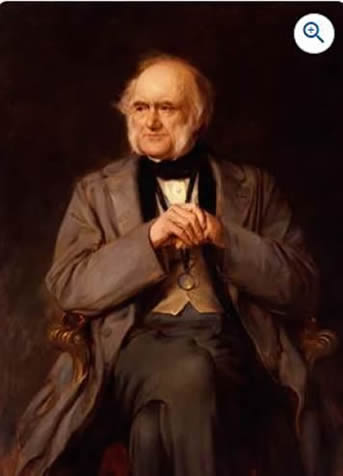 Charles Lyell |
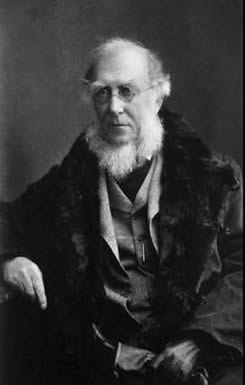 Joseph Hooker |
||
| TOP | Alfred Russel Wallace (1823–1913) | |||
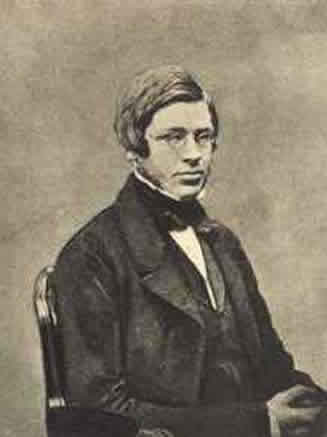
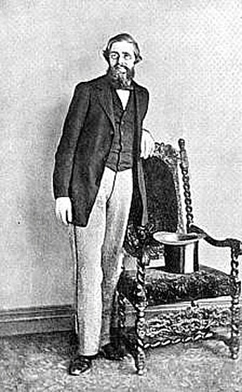
| Wallace was a visionary British naturalist, explorer, and geographer who independently conceived the theory of evolution by natural selection. He made major contributions to biology and geography that remain critical today. He was a professional collector of insects, birds, and all other animals. He travelled extensively in South America (1848 – 1852) and the Malay Archipelago (1854–1862). He successfully brought back more than 125,000 specimens from Southeast Asia, identifying thousands of new species. His Sarawak Law refers to a landmark evolutionary principle published in his 1855 paper, "On the Law Which Has Regulated the Introduction of New Species"."Every species has come into existence coincident both in space and time with a pre-existing closely allied species." For the original paper Click here; For a full discussion Click here. The law explicitly stated that new species evolve directly from pre-existing, closely related ones rather than being created independently. However, at this stage, Wallace had not yet identified how this happened (he develped the mechanism of natural selection three years later in 1858). While working near Bali he noted that species to the east were similar to other eastern species whereas those in islands only 15 miles west were very different, resembling those of western regions. We now know that this area is where three tectonic plates converge - so the separation of the areas in which he was collecting had been previously great distances apart. He pioneered research into warning coloration in animals and developed the "Wallace effect," which explains how natural selection contributes to speciation by creating barriers against hybridisation. He wrote extensive notes on his ideas leading to his idea of Natural Selection and had started preparations for a book on the subject - a parallel Origin of Species |
 |
 |
||
| Wallace in 1848 at age 25 | Wallace on return from the East in 1862 | |||
| TOP | ||||
| Charles Darwin (1809–1882) | ||||
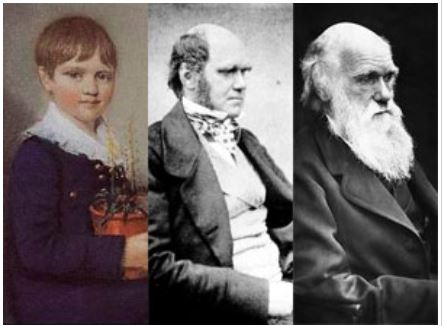
| Charles Robert Darwin was an English naturalist, geologist, and biologist widely known as the architect of the theory of evolution by natural selection. His seminal work, On the Origin of Species, fundamentally transformed the scientific understanding of life on Earth by establishing that all species evolve through a process of common descent. Note; Alfred Russel Wallace was the 'co-proposer' of the theory but Darwin's publication of The Origin of Species made him the centre of attention and of future work on the subject. He was born in Shrewsbury, England, into a wealthy and well-connected family. His father pushed him to study medicine at the University of Edinburgh, but Darwin found surgery distasteful. He transferred to Christ's College, Cambridge, to prepare for a career as an Anglican clergyman, graduating in 1831. However, his true passion remained in natural history and entomology. In 1831 at the age of 22, Darwin joined a five-year global surveying expedition aboard the HMS Beagle. He spent years exploring the coastlines of South America and isolated archipelagos, most famously the Galápagos Islands. He was especially interested in variations in wildlife—such as the differing beak shapes of his collection of Galápagos finches—and he began questioning how species originate. By 1838, Darwin formulated his concept of natural selection: organisms with traits better suited to their environment are more likely to survive and reproduce. He spent over 20 years quietly gathering evidence and In 1858, his theory of Natural Selection together with Wallace's paper was presented at the Linnean Society. The next year he published On the Origin of Species, which became an immediate bestseller and sparked intense international debate. He expanded his theory to humans in The Descent of Man (1871), arguing that humans share common ancestry with apes. He continued to live a quiet, secluded life at Down House in Kent with his wife Emma, though he was continuously plagued by chronic illness. Darwin died on 19 April 1882. He was granted the exceptional honour of a state burial at Westminster Abbey, reflecting the widespread scientific acceptance of his work by the end of his life. |
 |
|||
| An indication of the wide range of Darwin's interests and achievements is nicely provided by this chronological list of his major published books: 1839: The Voyage of the Beagle (Journal of Researches) 1842: The Structure and Distribution of Coral Reefs 1844: Geological Observations on the Volcanic Islands 1846: Geological Observations on South America 1851: Monograph on the Sub-class Cirripedia (Barnacles) 1859: On the Origin of Species 1862: On the Various Contrivances by which British and Foreign Orchids are Fertilised by Insects 1865: The Movements and Habits of Climbing Plants 1868: The Variation of Animals and Plants under Domestication 1871: The Descent of Man |
||||
| TOP | .................................................................................................................................................................................................... | |||
| .................. | ||
| The public introduction of the theory of Natural Selection to explain evolution and the origin of species | Useful links from Wikipedia | |
Darwin first formulated his core mechanism of natural selection in 1838 after reading Thomas Malthus’s Essay on Population. He wrote a brief 35-page sketch in 1842—which was the first time he wrote down the phrase "Natural Selection"—and expanded it into an essay in 1844. He only shared these privately with close confidants like the botanist Joseph Hooker. |
Darwin Lamarck Lyell Wallace Hooker Tectonic plates Introduction to evolution The last universal common ancestor World library of science on Darwin Understanding phylogenies and clades Phylogenetic tree of primates What is a clade The 1860 Oxford University evolution debate Evolution; the Modern Synthesis Translational epigenetic inheritance |
|
| TOP | ||
| S | An excellent introduction to Evolution is the New Scientist Essential guide No. 6 Evolution. An extensive enjoyable survey is given by Richard Dawkins in his book 'The Greatest Show on Earth; The evidence for evolution. |
|
| TOP | ................................................................................................................................................................................ | |
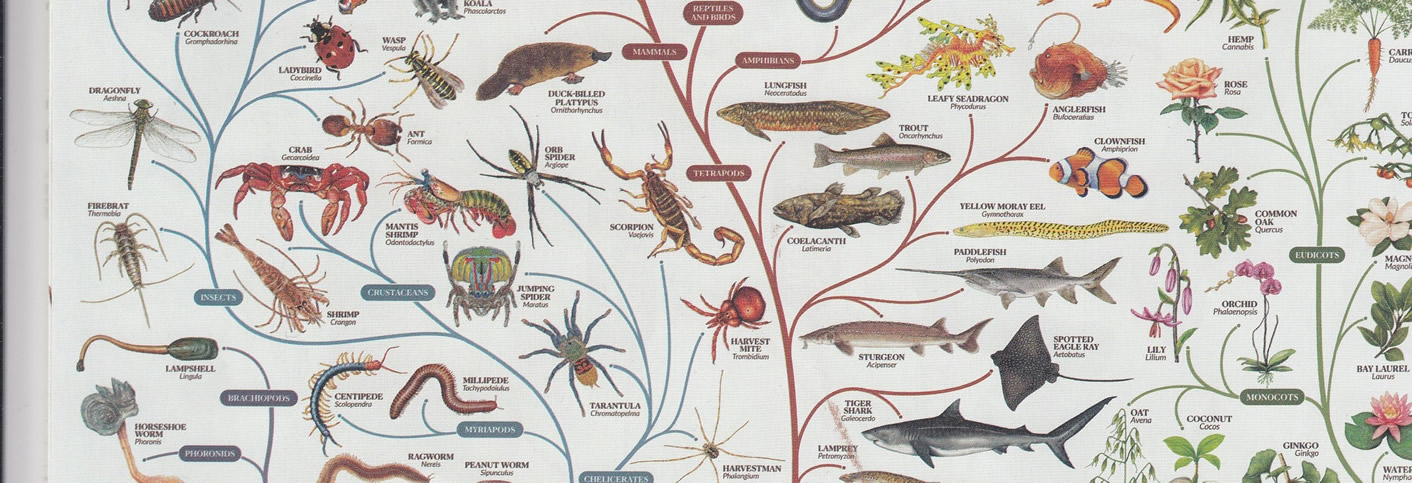
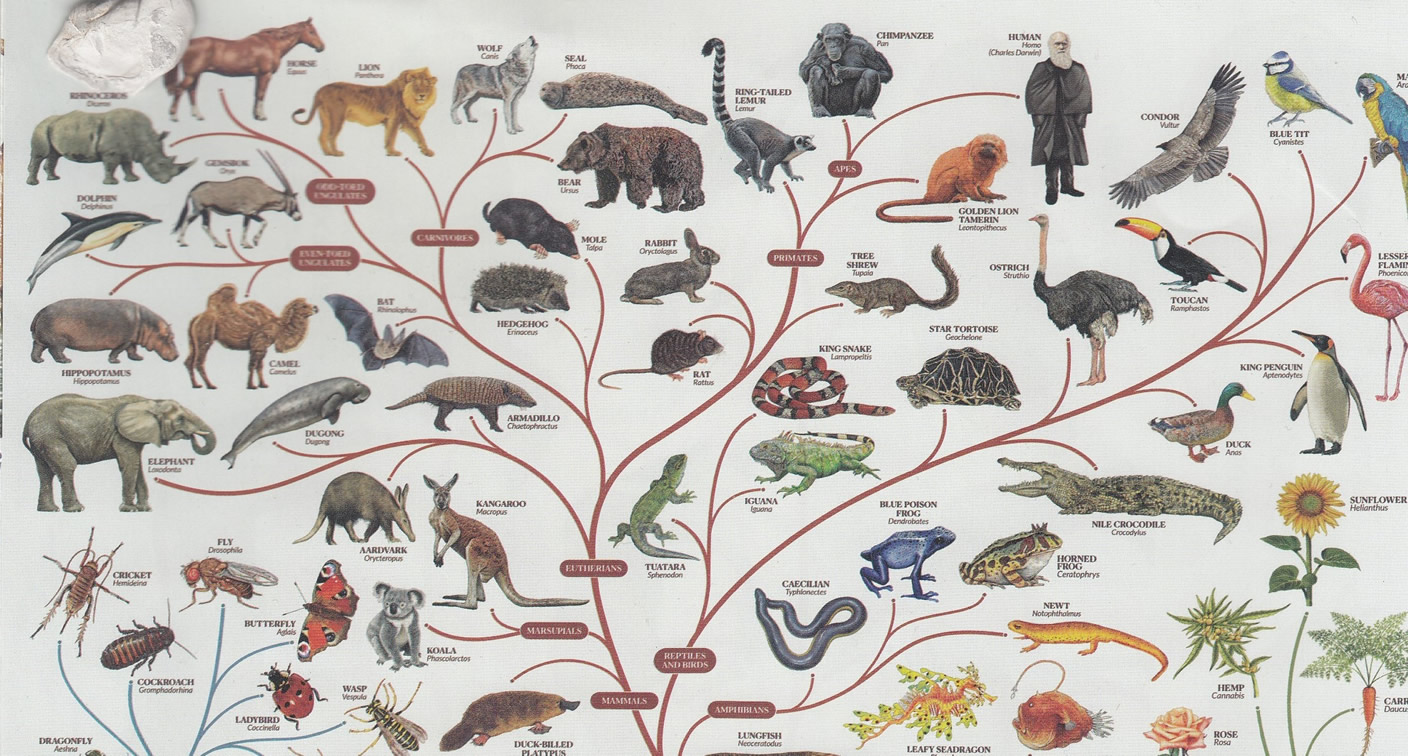
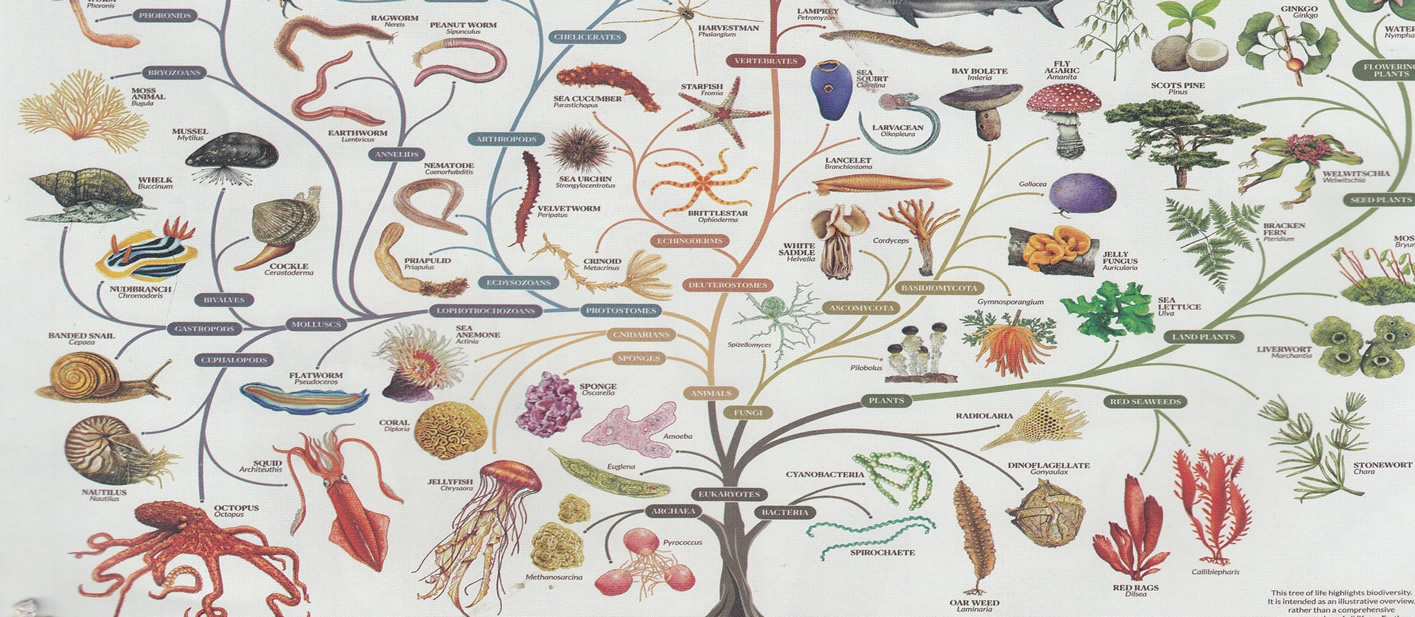
| Evolutionary trees. Taken from the BBC poster To increase size press Ctl plus + sign | ||
| ................. |  |
|
|
||
 |
||
| TOP | ||
| ................................................................................................................................................................................. | ............................................................................................................................................................................... | |